Deepfakes & AI
Deepfakes and AI-generated content: telling real from fake
Doctored videos, AI-generated images and voices: how to spot a deepfake, which clues to look for, and why the verification method remains your best defense.
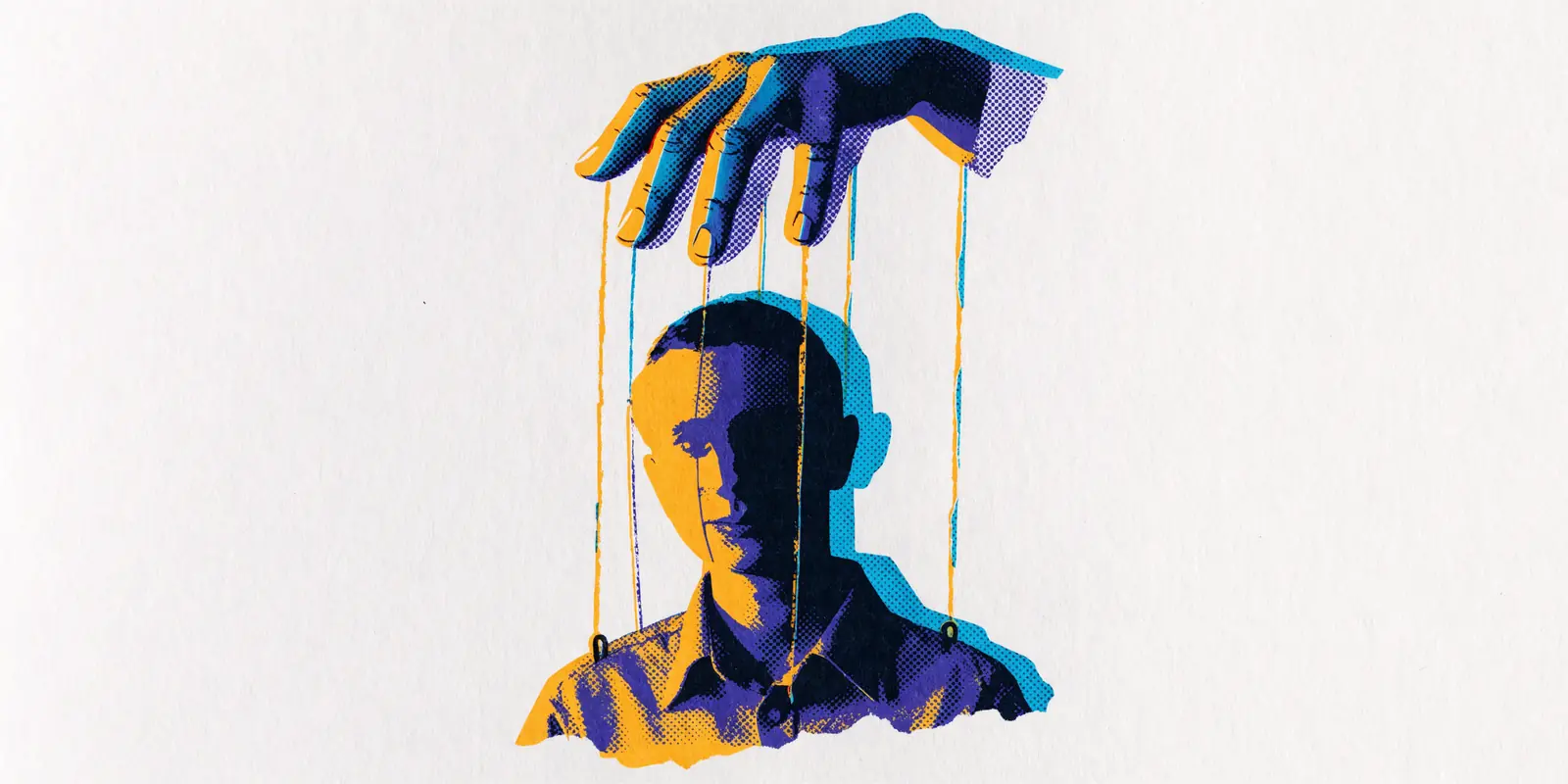
A video of a public figure saying surprising things, a photo of an event that never happened, a phone call imitating the voice of a loved one: AI-generated content is now part of everyday digital life. The word deepfake has entered common usage, often along with a vague sense of unease: how can you know what's true when machines can produce convincing fakes? This guide takes stock, without alarmism, of what this content really is, of what has changed recently and, above all, of the concrete things you can do to stay one step ahead. It's part of our overall approach to verifying information.
What is a deepfake?#
The word deepfake is a blend of deep learning (an artificial intelligence technique) and fake. It refers to synthetic media: a production in which the image, the sound or the text has been generated or modified by algorithms trained on large amounts of data. Originally, the term mostly referred to doctored videos that swapped one person's face for another's. Its meaning has broadened as the technology has advanced.
Today, there are four main forms of AI-generated content:
- Video. The most publicized case: an animated face, lips synced to a fake speech, or a sequence entirely fabricated from a simple written description.
- Images. Photographs of people who don't exist, invented news scenes, portraits or landscapes generated in a few seconds from a text prompt.
- Voice and audio. Voice cloning reproduces a person's timbre, accent and intonation from a few audio samples, to make them “say” anything at all.
- Text. Articles, comments or fake testimonials written en masse by language models, which fuel rumors and disinformation campaigns.
One distinction is essential to understanding the subject: the difference between entirely generated content and retouched or altered content. In the first case, nothing in the scene ever existed: the AI produces the visuals or the sound from scratch. In the second, authentic content serves as a base and the AI changes only part of it: a swapped face, a substituted sentence, an added backdrop. This nuance matters, because the two types leave different traces and call for slightly different verification reflexes.
Without getting technical, it helps to understand the principle all this content has in common. The models are trained on huge collections of existing images, sounds or texts, from which they learn the regularities: what a human face looks like, how light falls on a cheek, what intonation goes with a question. Once trained, they can produce new examples: plausible ones that copy no specific piece of content but imitate its characteristics. This ability to generalize is what makes the results so credible, and it also explains their remaining flaws: the AI doesn't “understand” the scene it draws, it renders a statistically plausible appearance.
- 1Datareal images / voices
- 2AI modeltraining
- 3Syntheticcontent
Why 2026 is a turning point#
For years, AI-generated content had visible flaws: six-fingered hands, frozen stares, inconsistent backgrounds, voices with a metallic ring. Spotting a fake was often a matter of careful observation. That era is coming to an end. The shift comes from a leap in the quality of generation tools, which are now available to the general public.
On the video side, several generators illustrate this progress. Veo 3, unveiled by Google in May 2025, generates the sound along with the image, including dialogue synced to the lips. Sora 2, launched by OpenAI in late September 2025, followed; its app shut down in April 2026, but its videos are still circulating. Runway Gen-4 focuses on keeping a character or a setting consistent from one shot to the next. Kling, developed by the Chinese company Kuaishou, is known for how it renders movement and depth. Without getting into a performance race that shifts from month to month, the overall picture is clear: these systems simulate the light, the shadows and the physics of a scene better and better, to the point of producing footage that is hard to tell apart from a real recording.
Two factors amplify the phenomenon. The first is democratization: what once required technical skills and expensive equipment now fits in an app anyone can use. The second is falling costs: generating an image or a few seconds of video now takes nothing more than a written description and a few moments.
This accessibility has creative and legitimate uses. But it also opens the door to concrete abuses, which should be named without being dramatized: political disinformation (fake statements attributed to officials), financial scams (fake investment recommendations, fake-relative scams) and attacks on reputation (compromising montages targeting a person). The point isn't to give in to panic, but to update your reflexes: instinctive trust in “what you see and hear” is no longer a sufficient guide.
It's worth keeping a sense of proportion, though. The vast majority of misleading content in circulation isn't sophisticated deepfakes, but authentic images and videos taken out of context: a real photo from a different event, old footage presented as recent. These decontextualizations remain by far the most widespread disinformation technique, because they're the simplest. Fully AI-generated content adds an extra layer of difficulty on top of them, without replacing the classic manipulations. That's why good verification hygiene has to cover both: the toolkit that helps you put an image back in its context works just as well for exposing a generated fake.
Spotting a deepfake video#
When you're faced with a suspicious video, some visual clues are still useful, even if they're becoming rarer. Look at the outline of the face, which is sometimes slightly blurry or poorly blended with the rest of the image, especially during quick head movements. Watch the eyes: blinking that is absent or excessive, reflections that don't match from one eye to the other. Teeth, ears and hair are areas where artifacts often persist. Check the lip sync: a lag between the lips and the sound often gives a manipulation away.
Beyond the face, examine the overall consistency of the scene: shadows pointing in contradictory directions, backgrounds that warp, objects whose proportions keep shifting, illegible text on a sign or a billboard. Lighting that doesn't “fit” between the subject and their surroundings is a classic signal.
These clues raise suspicion; they never prove anything. A high-quality video may show none of them, and an authentic but poorly compressed video may wrongly show some. Our dedicated guide details the steps to follow, frame by frame, to spot a deepfake video and to cross-check these observations with a real investigation into where the footage came from.
Spotting an AI-generated image#
An AI-generated still image is often more convincing than a video, because it doesn't have to handle movement. A few areas still give it away, though. Hands and fingers were long the generators' weak point: the wrong number of fingers, improbable joints, two fingers fused together. Recent models get them wrong far less often: an abnormal hand is still a signal, a correct hand proves nothing. Fine details sometimes betray the process: distorted text on clothing or a poster (a flaw that is becoming rarer with recent generators), asymmetrical jewelry, repeating patterns that blur.
Next, look at the logic of the scene: inconsistent reflections in a mirror or a window, multiple or missing shadows, background objects that blend into one another. A “too perfect” rendering, with smooth skin and idealized lighting, can also tip you off, without being proof on its own.
As with video, these clues are fading as generators improve, and they never spare you the work of tracing the image back to its source. Our guide explains in detail how to tell if an image is AI-generated by combining a visual examination, a reverse image search and an analysis of provenance.
Detecting a cloned voice#
Voice cloning is probably the form the general public underestimates most. A few seconds of audio (taken from an online video, a voice message or a meeting) are now enough to reproduce a person's timbre and intonation in a disturbingly convincing way. This technology fuels a category of scams that is growing fast: the fake call from a loved one in distress who urgently needs money, or the fake instruction from an executive ordering an employee to make a wire transfer.
When you listen, some clues can raise a flag: slightly mechanical prosody, breathing that is missing or out of place, a total absence of background noise or, on the contrary, background sound that doesn't match the situation described. But these signals are faint and easy to miss in the stress of a call.
Here, the best reflex is behavioral rather than technical: faced with an urgent and unusual request, call the person back on their usual number or ask a question only the real person can answer. Our guide to cloned voices and audio scams details these situations and the right ways to protect yourself.
Automatic detectors and their limits#
As synthetic content has grown, automatic detectors have multiplied: online services that analyze an image, a video or an audio file and return a probability that it was generated by AI. These tools are often themselves based on machine learning models trained to spot the statistical signatures left by generators.
They're genuinely useful, but you need to understand their limits so you don't trust them blindly. They produce false positives (authentic content flagged as generated) and false negatives (synthetic content judged authentic). Their performance drops when the content has been recompressed, cropped or reposted on social media. Above all, they suffer from a structural lag: each new generation of creation tools forces detectors to update, in a never-ending race.
A detector's result is therefore one more clue, to be interpreted with caution, never a verdict. For the specific case of images, we compare the available tools and their blind spots in our guide to AI image detectors.
Provenance: watermarks and Content Credentials#
Rather than trying to spot fakes after the fact, another approach is to certify what's authentic at the source. That's the logic of provenance: attaching verifiable information about a piece of content's origin to it from the moment it's created.
Two complementary mechanisms are being developed. The first is the invisible watermark: a discreet signal inserted into the content at the moment it's generated. SynthID, developed by Google DeepMind, marks the images, audio, video and text produced by Google's models in this way, and OpenAI adopted it for its images in May 2026. Since October 2026, the SynthID Detector portal (synthid.com) has let anyone check whether it's present, though it can say nothing about content that doesn't carry it. The second is the C2PA standard, which underpins Content Credentials: cryptographically signed provenance metadata, attached to the file, that indicate who created the content, with what tool and what changes it has gone through. This standard is backed by a broad coalition of players (including Adobe, Microsoft and other technology and media companies), a sign that it is gradually being adopted.
The two approaches reinforce each other: the watermark holds up better against a screenshot that wipes the metadata, while Content Credentials carry a rich, readable history. It's the most promising avenue for restoring trust at scale.
In practice, when a piece of content carries Content Credentials, anyone online can view them. More and more platforms display a small icon showing that this information is present, and dedicated online tools, such as the Content Authenticity Initiative's Verify, let you upload a file to read its provenance history: the creation tool used, the date, the successive changes.
European law is moving in the same direction. Since August 2, 2026, Article 50 of the European AI Act has required the providers of generators to mark what they produce in a detectable way (by December 2, 2026 at the latest for tools already on the market), and professionals who publish a deepfake to disclose it. An “AI-generated” label is therefore useful information when there is one. Its absence proves nothing: the obligation doesn't apply to private individuals, and people who set out to deceive won't comply with it.
This system remains incomplete, however. Not all generators add a watermark, and only content from participating tools carries one. Provenance metadata are often stripped when content is shared on social media or recompressed. And content with no provenance marker at all isn't authentic for all that: the absence of a watermark proves nothing, since most legitimate content still carries none. Provenance is something to build on for the future, not yet a universal guarantee: a complement to the method, never a substitute for it.
The method that doesn't change#
Artificial intelligence makes detection “with the naked eye” harder, and that trend is bound to intensify. The good news is that the fundamentals of verification don't depend on the technical quality of the fake. A deepfake, however well made, doesn't fall from the sky: it's published somewhere, by someone, in a context. That's where it becomes vulnerable.
Four reflexes remain your best defenses, whatever the content:
- Trace it back to the source. Who is publishing this content, on what account, and since when? A spectacular clip with no traceable origin, spread by a recent or anonymous account, already fails this first test, however realistic it looks.
- Cross-check with independent third parties. If an important video or statement were authentic, serious media outlets and institutions would report it. An “exclusive” that no reliable source picks up should make you suspicious.
- Run a reverse image search. For an image, or for a key frame taken from a video, this step often reveals the first publication, the original context or an existing debunk.
- Be wary of emotional urgency. Content designed to provoke anger, fear or outrage short-circuits your thinking and pushes you to share right away. Recognizing that strong emotion as a warning signal, and making yourself pause, defuses a large share of manipulations.
In other words, the technology moves the playing field without changing the rules. The right reflex isn't to become an expert in artificial intelligence, but to apply a rigorous, consistent method. We detail it step by step in our guide to verifying information, which is the foundation of any fact-checking process.
For videos in particular, the Factare extension makes it easy to run an analysis right from your browser, especially on YouTube videos. And to find out what content the platform can handle, from a TikTok post to a standalone image, see what Factare analyzes and how: for social media posts, the authenticity of the media is assessed separately from the truthfulness of what is said.
Frequently asked questions
What is a deepfake?+
A deepfake is content generated or modified by artificial intelligence (video, image, voice or text) and designed to look authentic when it isn't. The term comes from 'deep learning' and 'fake'. It covers both content entirely fabricated by AI and real content in which one part has been altered, such as a swapped face or a cloned voice.
How can you spot a deepfake?+
Some visual clues can help: blurry face outlines, inconsistent eyes or reflections, abnormal fingers in an image, lips out of sync with the sound, lighting that doesn't match the scene. But these signals are becoming rarer as the technology improves, and they never amount to proof. The most reliable reflex is still to trace the content back to its source and cross-check it with independent media.
Are deepfakes illegal in France?+
Creating or spreading a deepfake can fall under several offenses, depending on how it's used: identity theft, violation of image rights, defamation, harassment or fraud. Since the law of May 21, 2024 known as SREN, the French Criminal Code also explicitly covers AI-generated content: spreading, without the person's consent, a fabricated image or sound representing them, when its artificial nature is neither obvious nor disclosed, is punishable by one year in prison and a fine of 15,000 euros. Penalties are heavier when the content is spread online or is sexual. Since August 2, 2026, the European AI Act has also required professionals who publish a deepfake to disclose that it was generated or manipulated by AI. If you suffer harm, keep the evidence and contact the relevant authorities; the Cybermalveillance.gouv.fr website guides victims.
Are deepfake detectors reliable?+
Automatic detectors are useful but fallible. They produce false positives and false negatives, and their performance drops when the content has been recompressed or shared on social media. They also lag behind the latest generation tools. A detector's result should be treated as one more clue to interpret with caution, not as a definitive verdict.
How can you protect yourself from deepfake scams?+
The defense is mostly behavioral. If you get an urgent call or message that imitates the voice of a loved one or a superior and asks for money, call the person back on their usual number or ask a question only the real person can answer. Be wary of pressing requests that play on your emotions, never hand over sensitive information in a rush, and report attempts on Cybermalveillance.gouv.fr.